Building investor confidence across shifting market cycles requires a strategic balance of resilience, performance, and scale. At the upcoming LSEG Annual Investment Funds Conference 2026 on 2 October, Burson Buchanan’s Henry Wilson will lead a panel discussion addressing these exact dynamics live from the London Stock Exchange.
Session focus: What drives investor confidence across market cycles?
This year’s conference focuses on the areas of opportunity most critical to economic resilience and growth, highlighting the role of the active management industry in connecting these sectors with large pools of institutional and retail capital. Titled ‘Delivering performance and scale – what drives investor confidence across market cycles?’, this specific panel brings together a distinguished group of capital markets and investment experts to share practical insights, industry benchmarks, and forward-looking strategies for maintaining long-term trust.
Panel line-up
Henry Wilson (Moderator) – Partner, Head of Investment Companies, Burson Buchanan.
Robert Natzler – Deputy Fund Manager, The Schiehallion Fund
Oliver Kenyon, CFA – Senior Director, Business & Corporate Development, RTW Investments
Kevin Glover, CFA – Investment Director, Multi-Asset, Aberdeen
Will Ellis – Head of Specialist Funds, Invesco
Join the conversation
Register & view agenda: Attend in person or virtually via Spark Insights at the LSEG Registration page.
Burson Buchanan is delighted to confirm its return as a corporate sponsor for the London Stock Exchange Group (LSEG) flagship Annual Investment Funds Conference 2026.
Taking place on Friday, 2nd October 2026, this landmark industry event will be hosted both in-person at the London Stock Exchange and broadcast globally online via SparkLive.
Focus areas: Driving resilience and growth
This year’s conference centres on the market sectors and strategic opportunities most critical to driving long-term economic resilience and growth. High-level panel discussions and fireside chats will explore the essential role of active asset management in connecting these critical industries with substantial pools of institutional and retail capital.
The sessions will look closely at the listed investment companies’ sector and its evolving capability to mobilise scale and liquidity for strategic economic priorities.
Keynote speakers & special sessions
The conference features welcome remarks from Katya Gorbatiouk (Head of Investment Funds, LSEG) and an opening address by Dame Julia Hoggett DBE (CEO, London Stock Exchange).
This will be followed by two prominent industry keynotes:
- Patrick Thomson – CEO, EMEA, J.P. Morgan Asset Management
- Dr Rebecca Harding – CEO, Centre for Economic Security
Following the keynotes, a lineup of industry experts will share their perspectives on what lies ahead for the active management landscape. Notably, Burson Buchanan’s own Henry Wilson (Partner, Head of Investment Companies) will be taking the stage at 13:20 to moderate Panel 4: Delivering performance and scale – what drives investor confidence across market cycles?
Meet the Burson Buchanan team
Our specialist Investment Companies team will be out in full force to engage with portfolio managers, investors, corporate advisers, and board members. Alongside Henry Wilson, our attending delegation includes:
- Helen Tarbet – Partner
- Nick Croysdill – Director
- Jesse McNab – Senior Associate
- Jude Stokes – Senior Associate
If you are attending in person or virtually, our team would love to connect. Please reach out to any of our attendees ahead of October to schedule a meeting.
Event registration
The event is made possible through the collaboration of key market partners. Alongside Burson Buchanan, supporting organisations include Deutsche Numis, Stephenson Harwood LLP, Guernsey Finance, The Association of Investment Companies (AIC), The Chartered Institute for Securities & Investment (The CISI), Institutional Investor, the Pensions Management Institute (PMI), and The Investor Forum CIC.
To review the full session schedule and secure your ticket, View the LSEG agenda and register your interest here.
Please join Burson Buchanan’s Partner Helen Tarbet at the upcoming LSEG webinar: Preparing for the upcoming AGM Season alongside expert panellists Alliance Advisers, Hill Dickinson LLP, and The Law Debenture Group.
Tuesday 3 March 2026, 14:00 UK time
Preparing for a Successful UK Listing: Key Considerations for Boards and Management
Join Burson Buchanan’s Partner Helen Tarbet at the upcoming LSEG IPO Readiness webinar alongside speakers HaysMac, Fladgate, and Vistra.
Wednesday 21 January 2026, 14:00 UK time
Preparing for a Successful UK Listing: Key Considerations for Boards and Management
Join Burson Buchanan’s Head of Investment Companies Henry Wilson at the upcoming LSEG Investment Companies webinar alongside speakers Deutsche Numis, Herbert Smith Freehills, KPMG.
Wednesday 26 November 2025, 14:00 UK time
Investment Companies: How is the sector reshaping to deliver shareholder value?
Berenberg International Women’s Day
Many thanks to Berenberg for hosting their International Women’s Day panel discussion last Thursday at The Tate Modern. With glorious views overlooking the City from the Southbank, the panel discussion, moderated by Berenberg’s Lauma Kalns-Timans, focused on women’s healthcare within the NHS and included an excellent line up of Caroline Perez, #1 Sunday Times best-selling author of ‘INVISIBLE WOMEN: Exposing Data Dias in a world designed for Men’, Peter Turek, Head of Women’s Healthcare at Gedeon Richter and Jo Cruse, Founder of Delivering Better, a movement aiming to create extraordinary change within the maternity care sector of the NHS.
When discussing women’s health, the conversation can’t but help turn towards maternity care, one of the oldest forms of medicine in human history. And yet, despite this, it was still astonishing to hear some of the statistics raised by the panel and from members of the audience who either work in or, through their own pregnancy journeys, experienced some of the following first-hand:
- Of the c.600,000 women who give birth every year, ¼ of them (150,000 women) have a negative birth experience, either physically or mentally.
- The UK has the biggest gender health gap in the G20, with 2/3 of maternity units in the NHS deemed unsafe to give birth in.
- C.90% of all medical research and studies are carried out on male cells. Male and female cells can react in different ways to different medicines, therefore meaning that crucial medical solutions that could work for women aren’t even making it out of the research stage.
If we were to look at the maternity care within the NHS as an individual company, with an annual compensation bill for negligence sitting at over £1bn and around 1/3 of women having negative birth experiences being impacted on their ability to return to work (c.50,000 women a year), the red flags should be flying high and making news headlines daily. This is not a health crisis affecting women, but one that touches all aspects of life, from the office to childcare and has a huge economic impact.
The economic, social, moral and political value in women’s health were clear in fact, and hearing from those at the front line was a fantastic way to celebrate IWD in the City.
Thank you to Berenberg and all your speakers for continuing to raise awareness of this health crisis. If you’d like to help, get involved by signing the Delivering Better open letter to Wes Streeting here: https://deliveringbetter.org/
Burson Buchanan had a busy Mining Indaba 2025, the conference where the great and good of the African mining industry convene for a 3-day event in sunny Cape Town in early February.
By Bobby Morse, Senior Partner
We kicked off with a site visit to the Mogale Tailings Mine in Western Johannesburg, which just started commercial production in December last. One of Pan African’s operations, this new state of the art tailings operation is a highly profitable and environmentally beneficial gold mine, which is now generating strong cash flow, employing over 500 direct jobs, as well as cleaning up liabilities generated from previous mining activities. Mogale is expected to produce between 50,000 to 60,000 ounces of gold annually, which is great timing considering gold is pushing towards record highs and is close to breaching US$3,000/oz.


Moving south to Cape Town, the annual Diggers vs Dealers cricket match on Sunday 2 February, organised by Burson Buchanan and now very much established as the curtain raiser for Mining Indaba, was attended by over 200 guests combining the financial and mining worlds ahead of the conference. The conviviality of the food and drink on offer did not lessen the competitivity of the cricket match, for the tenth year, with the Diggers overcoming an obdurate Dealers team to record the second win in a row, in hot and sultry conditions. A shout out to the other cricket event sponsors including Hannam & Partners, StoneX and Wia Gold, who helped make this great sporting and social event happen. The new cricket equipment and kits were donated to a local charity, Calling Education, a not-for-profit organisation building high-quality secondary schools for low-income families in the Cape and Stellenbosch regions. They have built two such schools to date, with a third in construction, and the ability to offer their students high quality safety equipment for playing cricket is essential to encouraging healthy extra-curricular activities among students.
Starting on the Monday, the Mining Indaba conference itself was somewhat polarized by the contrasting forces of strong metal price momentum, particularly gold which reached an all-time during the conference, dampened by the spectre of the new US Administration imposing punitive tariffs on a plethora of its close trading partners. In addition, the constant drumbeat on the sheer volume of critical metals required for the energy transition continued unabated from previous years, with greater recognition that Africa, as a continent, now has a huge opportunity to play a much bigger role beyond its key commodities of copper and cobalt, particularly from the Democratic Republic of Congo (DRC) and Zambia. Connected to both those countries, I moderated a high level and extremely well-attended (over 300 guests) panel discussion, hosted by Africa Finance Corporation, at the prestigious One & Only Hotel on Tuesday 4 February.
This panel focused on the game changing Lobito Corridor development, a strategic infrastructure project, co-led by the US and European Union, with funding from AFC, AfDB and Trafigura, which will link the DRC and Zambia’s Copperbelt by rail, connecting with the Lobito Port in Angola – opening up Africa’s Western seaboard to export their valuable products, including copper and cobalt to the western world.
One of the main news items during the conference was the significant fund raise by ASX-listed Predictive Discovery, one of Burson Buchanan’s leading gold mining clients, who welcomed both the Lundin family from Sweden, and Zijing Corporation, a giant Chinese gold company, as strategic investors in Predictive, raising almost A$70m to accelerate the development of its flagship Bankan Gold Project in Guinea, West Africa, currently Africa’s largest gold development project.
Burson Buchanan also had numerous engagements with its other clients attending the conference, with Kodal Minerals updating the market on its Bougouni Lithium Project in Southern Mali, which has since gone into production; Sovereign Metals presenting the Kasiya project in Malawi, the largest known rutile and second largest graphite deposit on the planet, following its comprehensive optimised PFS announcement; as well as private companies Westate Resources (gold in Zambia) and Koidu (diamonds in Sierra Leone), having a number of impactful investor meetings.
All in all a very busy 3 days…
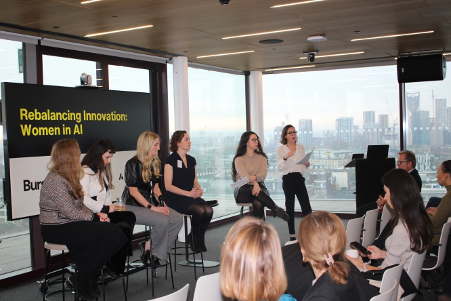
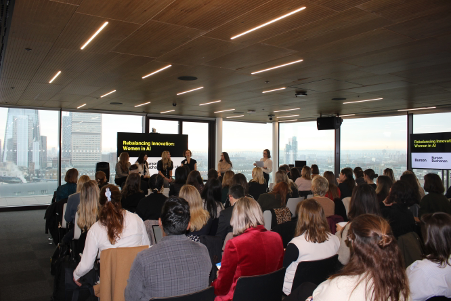
On 21 January, Burson, Burson Buchanan and Axicom brought together their networks of clients and advisors for a panel event in London with representatives from Sage, Investec, Labour Digital, LightheartedAI and LSEG to discuss the continued evolution of the AI sector with a particular focus on exploring the lack of female representation and the scarcity of funding for women in AI.
By Stephanie Whitmore, Associate Partner
What gave you the idea for the Rebalancing Innovation: Women in AI event?
In January, as technology experts across the Communications, Investment, Corporate, Media and Advisory worlds set out their ‘Key Predictions for 2025’, the recurring theme was that AI is going mainstream. It was time for AI to move from “Confident Toddler” to “Confident Teen” – according to our panellists.
The critical impact AI can have on everything from how we fight disease, to the way we work, to how we run our families and homes was made clear.
However, as LinkedIn lit up, corporate marketing gathered pace and column inches grew, the question emerging in my mind was whether we are at risk of making another technological shift as monumental as the introduction of the internet, or pillar of society as influential as Western medicine, that was neither made by or for women?
I was not aware of a physical or virtual space where the lack of equality evolving within AI – in the building, application and regulation – was being discussed. And what impact will there be if AI continues to evolve with an inherent bias towards men? More importantly, what could be done to change this?
Why is now the time to be talking about this topic and how did working with Burson & Axicom impact the event?
In July 2024, Burson Buchanan joined forces with BCW, H&K, and Axicom to create a leading global communications agency. As the newly formed Burson Group, we have relationships across the corporate lifecycle; we can help clients fundraise, build a brand, protect reputation and help influence public policy, all of this being led by WPP’s most cutting-edge AI technology. With over 6,000 employees across North America, Latin America, EMEA and Asia Pacific, Burson represents some of the world’s leading brands and high growth organisations.
The Burson Group is therefore uniquely placed to bring people together to discuss this important topic. If we accept that AI is the next era defining development, it’s imperative we get this technology right from the start, in a way we perhaps haven’t for other technological shifts.
However, to have any meaningful success we need to find a way to not only look at the issues but to also tease out the solutions in a collaborative way that does not isolate experience to the individual. We need to bring women and men from across roles, sectors, and business growth stages together.
We’ve had six months to start exploring how we can all work collaboratively, and it felt like a great opportunity to bring our newly joined worlds together. Now was the time to explore the questions, think about solutions, and build relationships to address emerging bias.
As one of the panellists said in the run up to the event “it’s not a unicorn we need, it’s a whole different beast required to make it as a woman in business”. We want to help provide visibility for women, which in turn leads to accountability, and encourage a more equitable future.
What were the key takeaways?
When Lucrezia Cester, CEO and Founder of startup LightHeartedAI, said it was estimated that only 0.4% of funding in AI is given to female founders, with $billions currently allocated to the sector, we were all taken aback, particularly when women make up 51% of the global population. There were so many important conversations to emerge from the diverse panel but a couple of key points included:
Addressing early years education was a recurrent theme. Making STEM learning for women and girls more attractive, accessible and culturally normalised, was vital – it was great to hear some of the grass roots programmes Sage was running up in the Northeast. A huge part of making these subjects attractive to girls at school is by having more women in leadership roles in STEM sectors to look up to and aspire to be like.
Fundraising for women in AI/tech was also discussed at length, and the experiences of Virginia Bull, Investec, and Lauren Crawley-Moore, London Stock Exchange, were central to this debate. To build the next generation of female founders, there needs to be access to funding pools, and those funding pools need to have women as well as men on investment committees. Virginia explained in 20 years of investment banking she’s never worked with a female founder – this isn’t good enough! It’s not just a Founder problem – it’s a challenge for the whole industry. There’s so much focus on UK pension fund capital allocation policies – and those of VCs and PE houses – do we need to amplify the voice of women more here too? The key takeaway was that it’s imperative that female-led companies are given the right opportunity at the right time and with the right investor audience.
Attracting and maintaining female talent was another theme that was highlighted in the insightful Q&A session. We hosted a fantastic audience, with the likes of Amazon, Sky, BT, Nomad and Sage joining us, as well as a whole host of growth focussed businesses and the intermediaries that support their ecosystem; it soon became clear that the gender imbalance is affecting the success of UK businesses across the board. This was not only in terms of lack of funding but also difficulties with hiring female talent across all levels and maintaining female employees to the point of them obtaining leadership and Executive roles. On the latter point, it was highlighted how women are over mentored and under sponsored – the mentoring often does not lead to tangible results.
We must remember that this isn’t about demanding a percent of women in business for the sake of it, diversity is the key to future corporate success. We learnt that Sage has a policy for no more than 60% of one gender in a leadership team as the dominance of any one particular group does not provide the best outcomes – that’s a great takeaway as we return back to our desks.
Another example was given of women in a tech company being asked for their feedback on how to improve the workplace to both attract and retain female employees – something so simple and yet more than likely overlooked in most companies for all employees!
How do you think the event helped move the conversation forward for individuals, companies and Government?
Bringing such diverse perspectives together was a privilege – highlighting the individual challenges but, importantly, thinking about solutions too.
Men and women working together was discussed as an absolute, for everyone’s benefit, and the risk of creating echo chambers – particularly with AI in use – is a concern and not productive for anyone. Thinking about how we get more men into the room to hear these important conversations is a real point of focus going forwards, and communicating that pushing one gender up isn’t to the detriment of the other.
The discussion zoomed in on the importance of building communities and networks to elevate concerns, share tips, and establish the intersections of our working worlds. I’m glad we can use our network of Burson, Burson Buchanan and Axicom to navigate some of these important issues and bring people together.
In terms of practical steps for businesses, the common misconceptions involved when hiring either a women or a man in their 30s were discussed and how they can create further barriers for women entering the technology industry. To change expectations and assumptions, maternity and paternity policies need to be more equal and management teams need to be aware of the true data behind building a stable workforce.
Our moderator Casey Calista did a fantastic job, and her current position as Chair of Labour Digital left her well placed to explore how policy would be at the heart of moving the conversation forward. She mentioned the Women Pivoting to Digital Taskforce and some of the key areas they are focused on.
Our CEO startup Founder, Lucrezia, commented that certain UK Government initiatives have been really helpful for female founders – but there’s still a bias among investors who think female led businesses are less revenue generating and more ‘lifestyle’ businesses which is wholly untrue.
The final point I’ll bring up is the media: “girls can’t want to be something they can’t see”. As Communications professionals, we have a responsibility to “do the work” to get more female leaders visible in traditional and social media to give role models for younger generations, ensuring we can make it through the two key drop off points of tweenhood and senior leadership outlined by Amy Lawson.
It was also interesting to learn how many communities and networks there already are that can help. So many communities, networks, podcasts and wider resources were mentioned today. We’d like to collate and share a list of these so we’re asking all our attendees to send their ideas and we’ll follow up in a few days time!
On 10 October, Burson Buchanan were pleased to sponsor and host The Geological Society Business Forum event on Public & Investor Relations in the Extractive Industries – How to Attract and Manage Investors in a Social Media Driven World with speakers Ben Romney, Partner, Energy at Burson Buchanan and Alex Stella, Managing Director of Investor Hub on an engaging Q&A panel moderated by Mark Steeves.
The event brought together leaders of listed and private resources businesses to discuss how to utilise the multiple channels of information to promote their investment propositions and reach a wider stakeholder audience. With social media playing an increasingly important role in business communications, supporting the promotion of everything from brand awareness to recruitment and crisis situations, it is essential that companies understand how to use these tools, and create the short-form informative content increasingly sought by shareholders, to achieve their communications objectives. During the discussion, the panellists discussed the growing trends from stripped back management videos that help personalise leadership to promote authenticity and build trust with stakeholders, to the pitfalls to be avoided including personal political statements and “over-informality”. Also addressed was the growing role that AI would play as a tool for both IR and the investor community, with AI tools being used by investors to assess the tone and language of earnings calls to inform their investment decisions.
A key takeaway for the audience was that companies should take ownership of their shareholder relationships by using communications tools that gather data and provide analytics so that companies can understand the composition of their share register and target prospective investors directly rather than relying on external service providers. Another concluding note was that these newer communications tools (social channels, short form content, AI) complement the more traditional channels (press releases, presentations, business and trade media and sell-side research) to ensure a wider reaching and coherent communications strategy that supports business objectives, and that failure to understand and integrate them into your communications activities would reduce a company’s chances of competing for growth capital.

Members of the Buchanan Investment Companies team were pleased to attend the Annual Investment Funds conference hosted by the London Stock Exchange Group.
There was a compelling agenda for the event that was also extremely well attended by the industry. The conference kicked off with an excellent keynote speech by Peter Harrison, Group Chief Executive of Schroders who set the tone for a day of discussion and debate. This was then followed by multiple panels where industry leaders answered relevant questions and discussed the pertinent topics of the day, ranging from changing institutional allocations, to the future landscape for alternative assets and much more.
The panel discussions were supplemented by Q&A sessions as well as a fireside chat with Tom Slater, the Manager of Scottish Mortgage Investment Trust. The conference then wrapped up with a powerful address from Baroness Bowles of Berkhamsted, Non-Executive Director, London Stock Exchange plc, on the defence of the Investment Companies industry in response to external pressures.
It was excellent to see the sector come together to celebrate the strengths of the sector, as well as some of its headwinds with insightful discussions and a shared feeling of positivity about the future.
Find out more about the event.